.png)

Member Spotlight: Dr. Rong Yi

PhD, Economics, Boston University
BS, Peking University, Beijing, China
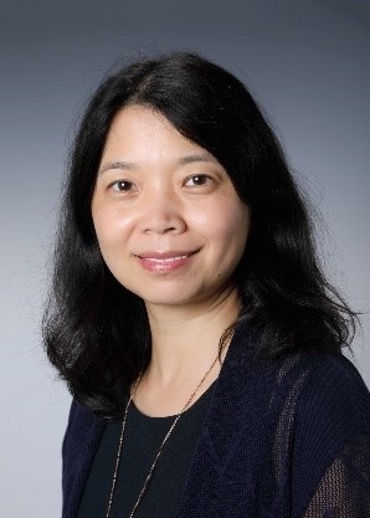
Dr. Rong Yi leads Milliman’s Data Science Modeling Practice and focuses on analytics, big data, data science tools, methodologies, strategies and operations for payers, providers, and other healthcare stakeholder entities. She joined the firm in 2009.
Dr. Yi has worked with U.S. and international clients extensively in a broad range of areas. She has developed methodologies, analytic solutions, data strategies and operational processes to support clients in national, state, and locallevel market reforms and provider payment reforms. She has also consulted to organizations in early stages and in business transformation on analytic capacity building,
training, and business strategies.
She is a significant contributor to risk adjustment. Some of the models and methodologies she developed have been widely adopted in the U.S. and other parts of the world by government and private healthcare payers.
Dr. Yi has served as an ad hoc grant reviewer for the Federal Agency for Healthcare Research and Quality. She is an adjunct professor at Peking University’s Institute for Global Health and Development. She is a frequent speaker at industry conferences and has published numerous articles on a wide range of healthcare topics.
Her affiliations include the International Health Economics Association and the American Society of Health Economists.
Questions:
How did you first become interested in relational health?
Relational health is, at its core, a very intuitive concept. We all recognize that relationships shape wellbeing—we talk about attachment, bonding, caregiver–child connection, family functioning, social support, and protective factors.
For me, the first time I started to engage with this as something measurable was through modeling healthcare outcomes using social determinants of health and other medical/clinical indicators. That work pushed me to move beyond acknowledging relationships as “important” and toward asking: Can we quantify their impact? How do relational supports and stressors show up in real-world data, and how do they relate to outcomes over time?
Then, a couple of years ago, I attended the Reach Out and Read National Conference in NYC for the first time, and that was the moment I began thinking about relational health in a much more practical, operational way—what it looks like in day-to-day care and how small changes can be built into routine workflows. I heard Dr. Junlei Li describe a simple intervention introduced in orphanages in China: during diaper changes, caretakers were coached to add brief moments of connection—eye contact and a few words of encouragement. Those micro-interactions made a measurable difference in babies’ growth and wellness. I also heard many others share powerful experiences, and it remains one of the most memorable conferences I’ve attended. It left a profound impression on me—and it’s also where I met Claire Viglione, cofounder of the GrowBaby research network.
What areas of research or practice currently excite you most?
The biggest theme for me right now is how AI, cloud computing, and broader data availability are changing the way I work. They’re speeding up the mechanics of analysis so I can spend more time thinking carefully about what the results mean, what questions are worth asking, and how to translate findings into something useful. In a way, I finally feel more like a real economist these days: I’m able to step back and look at bigger trends—not only within healthcare, but at a broader macro level. It’s changed my time allocation, pushed me toward deeper thinking, and I’ve learned a lot in the process.
For example, I keep coming back to a question that feels simple but is actually hard to answer well: why do some health systems consistently get better results? How do they keep healthy people healthy, and help higher-need people avoid that “slippery slope” of worsening conditions? In my New York Health Foundation study, we found empirical evidence that primary care—when delivered strategically to the right people at the right time and in the right “dose”—can be associated with lower total cost of care, and that finding has stayed with me.
I’ve also been drawn into climate–health work—using large-scale data to understand how extreme heat, wildfire smoke, and air pollution show up in real outcomes like utilization, morbidity, and cost, and how those impacts vary across communities. What motivates me is translating that into something practical: who is most at risk, where care may be strained, and what prevention and resilience steps could help most.
What are some of your interests outside of work?
I love reading both nonfiction and fiction—especially history and science—and I also love music and learning languages.


Comments